Culinary Delights in Burgenland
Experience the Pannonian Lebensgefühl on vineyards, in cellar lanes, and Michelin-starred restaurants
Introduction
When talking about Burgenland’s cuisine, the term ‘Pannonian’ comes up again and again. Menus feature dishes such as Pannonian fish soup, made with paprika and zander or catfish from Lake Neusiedl. The name refers to the climate of the Pannonian Plain, which is known for being warm, dry, mild and low in rainfall. Steppe cattle, Mangalica pigs and free-range geese thrive here, as do vegetables such as peppers, tomatoes and chillies, grown under generous sunshine. It is fertile ground for creative chefs who combine traditional dishes with regional ingredients.
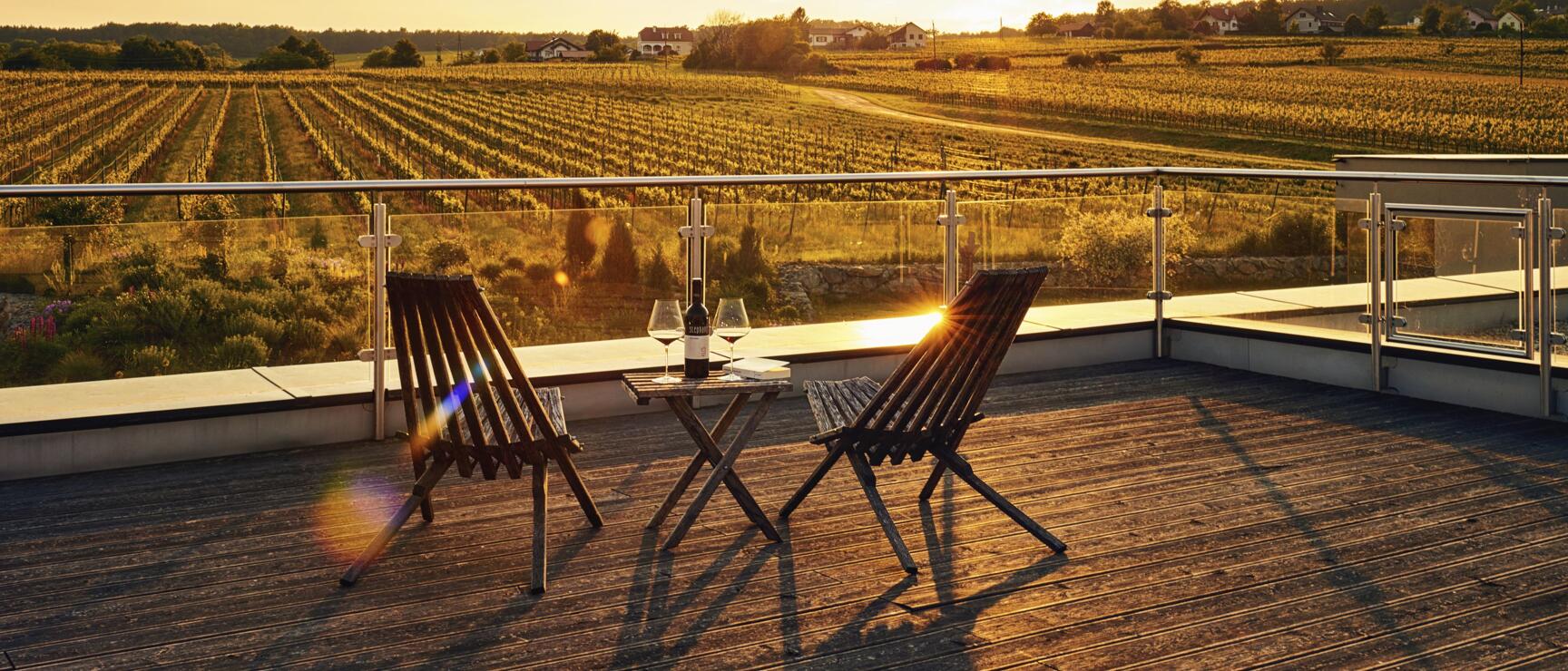
Full-bodied red wines such as Blaufränkisch are grown in central Burgenland and, thanks to the knowledge and craftsmanship of local winegrowers, capture the region’s sunshine in the glass. In country inns and traditional wine taverns, hosts serve regional specialities. In the north, centre or south alike, Burgenland stands for living well and enjoying life on the sunny side.
Tips for gourmets in Burgenland
Culinary experiences in Burgenland
Wine-growing regions
Lake Neusiedl
Red wine blends and Zweigelt thrive on sandy, loamy and gravelly soils, producing region-typical quality wines under the Neusiedler See DAC designation. The mild microclimate of the Seewinkel gives rise to luscious sweet Prädikat wines, while the town of Rust is known for Ruster Ausbruch DAC. On the Leitha Mountains, mineral-driven white wines are produced under the Leithaberg DAC label.
Central Burgenland
Deep, water-retaining soils rich in Leitha limestone make Deutschkreutz, Horitschon and the surrounding villages a stronghold of Blaufränkisch. Mittelburgenland DAC stands for ruby-red, berry-driven and spicy Blaufränkisch wines; in the Rosalia region, fruity rosés are also produced.
Southern Burgenland
On the Eisenberg, terroir-shaped Blaufränkisch matures with a distinct mineral and spicy character – Eisenberg DAC. Along the Pinkatal Wine Road, Welschriesling and Burgundy varieties offer pleasant surprises. A local speciality is Uhudler, known for its aromas of wild strawberries or redcurrants. From the ‘Weinblick’ viewpoint on Eisenberg, panoramic views open out across the vineyards.
What does DAC mean?
DAC stands for Districtus Austriae Controllatus and refers to the regionally typical quality wines of a specific area.
Precious as gold: Products from Burgenland
Experience originals from Burgenland!
Lisztomania: Fine tableware meets great cuisine. Ceramic artist Mia Kostyan creates three plates for the favourite dish of Franz Liszt: calf’s head, brain and delicate salad. Interpreted for the plate by Michelin-starred chef Alain Weissgerber of Restaurant taubenkobel.
Wedding baking meets patisserie: Burgenland’s wedding baking is a craft tradition passed down through generations and still very much alive today. Experienced wedding baker Aloisia Bischof prepares traditional biscuits, which are then reinterpreted by patissière Lena Zachs.
A must-try: Christa Erdely, managing director of Lafnitztaler Bauernspezialitäten, and her team have developed five entirely new Sterz creations – combinations that are unfamiliar even in Burgenland and well worth trying.