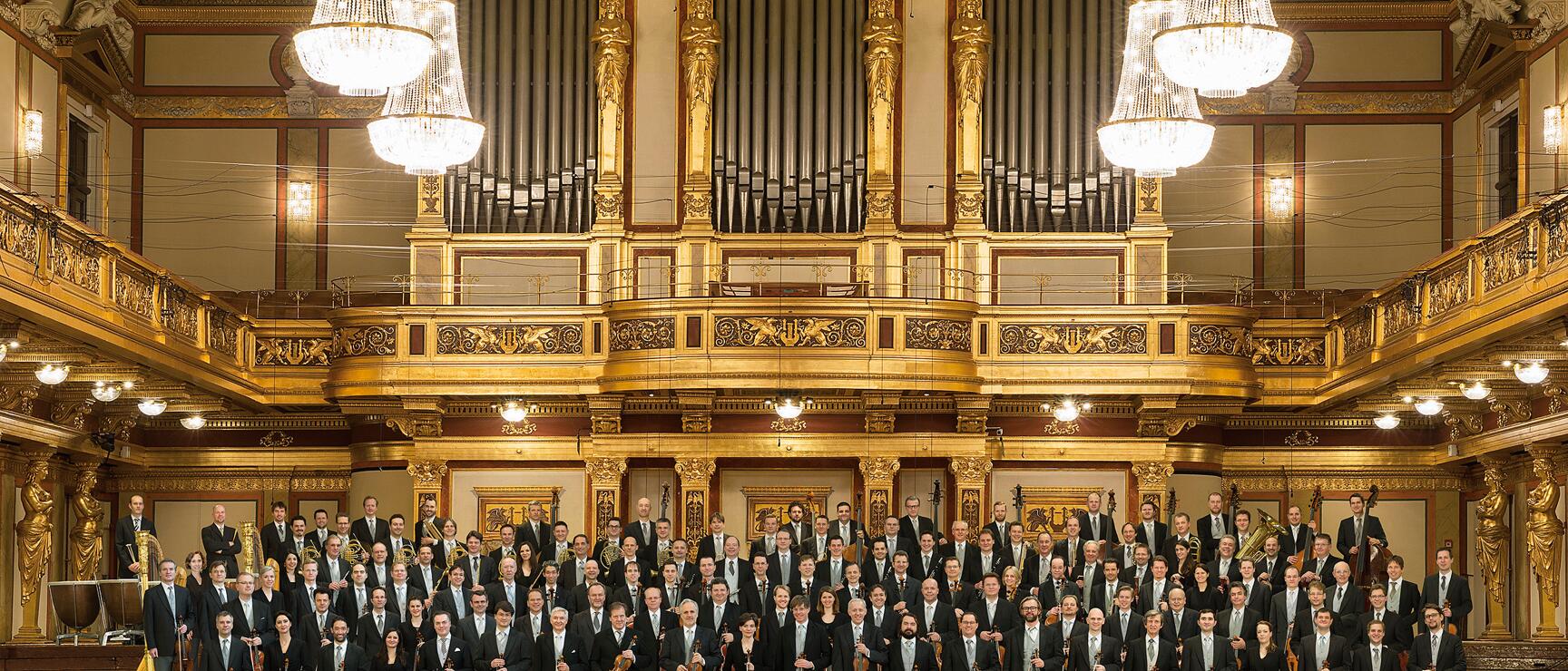
The Vienna Philharmonic Orchestra
World-famous orchestra with long-standing tradition
Introduction
The Vienna Philharmonic Orchestra began in 1842 with a major performance called the "Great Concert" under the name "Philharmonic Academy." Before this, Vienna didn’t have a concert orchestra made up entirely of professional musicians, even though there was a strong interest in symphonic music. This meant a new group of musicians had to be put together for each concert. Since then, musicians for the orchestra have been selected from the Vienna State Opera’s ensemble, a tradition that remains unchanged.
Today, the Vienna Philharmonic performs both opera and concert music, delighting audiences worldwide—whether in Vienna at the Opera House or the Musikverein or on stages abroad. In the summer, they also play at outdoor events, like the Salzburg Festival, bringing music to stunning open-air venues.
Few orchestras are as connected to the history and traditions of European classical music as the Vienna Philharmonic. From its beginning, it has shaped the world of music, known especially for its unique "Viennese sound," which performers and conductors still highlight - and, of course, their New Year's Concert.
But the Vienna Philharmonic is more than an orchestra—it’s a symbol of Vienna’s way of life.
The Vienna Philharmonic's New Year's Concert reaches a worldwide audience of over 50 million people every year and is broadcast live in more than 90 countries.
For us as an orchestra, the acoustics of a venue are crucial, and adapting to them is part of what makes it exciting. Whether in the Musikverein or outdoors, every composition sounds different and reaches the audience in its own way.
Karin Bonelli, Flautist, Vienna Philharmonic
The Vienna Philharmonic sound style with tradition
What lies behind the fascinating sound style that audiences love so much? It is probably more than just the instruments – although, as Karin Bonelli explains, they do play a major role. The flautist describes the vibrations that create this distinctive listening experience as a 'blendable, rounded and warm sound'.
This sound is deeply rooted in the musical awareness of the Viennese tradition and is passed down from generation to generation within the orchestra.
The way the instruments are built dates back to the 18th century, the era of Viennese Classicism. The Vienna Philharmonic see themselves as heirs to the cultural heritage of that time and largely did not follow the new influences of the 19th century. They remained true to the sound ideals of the age of Mozart, Haydn and Beethoven. As a result, Viennese wind instruments differ in their playing technique from those used by international symphony orchestras – most notably the Viennese oboe and the Viennese horn.
Where to see the Vienna Philharmonic
Events with the Vienna Philharmonic
Museum of the Vienna Philharmonic Orchestra
The Vienna Philharmonic Museum in the House of Music offers a captivating journey into the history of this world-famous orchestra. Opened in 2000, this interactive sound museum provides a rich view of Vienna's musical heritage and the orchestra’s deep ties to Viennese Classicism. On the second floor, visitors can explore historical documents, photos, and exhibits connected to composers like Bruckner, Brahms, and Mahler.
A highlight is the cinema room, where excerpts from the New Year and Summer Night Concerts are shown. Beyond historical displays, the House of Music also features interactive exhibits on the science of sound and the evolution of music. Visitors can even try conducting the Vienna Philharmonic virtually.
The Vienna Philharmonic New Year's Concert
The New Year's Concert at Vienna's Musikverein is a treasured way for many to welcome the New Year. For the world’s leading conductors, directing this annual event is a true honour. Vienna, renowned as the city of music, is home to one of the finest orchestras globally, the Vienna Philharmonic. The "Great Hall" of the Musikverein, celebrated as Vienna's most beautiful concert hall, is also renowned for its exceptional acoustics. The concert’s grand finale, the lively Radetzky March, sees the conductor guiding the audience's clapping, creating an especially joyful atmosphere.
Due to high demand, tickets for the New Year's Concert are exclusively raffled through the Vienna Philharmonic's website, ensuring that people from around the world have a fair chance to attend. Registration for the ticket raffle is open from January to February.